
Step-by-Step Bulkhead Inspection Guide for Long-Term Waterfront Protection
When discussing waterfront properties, they need strength, mainly where land mixes with water under consistent stress. Bulkheads are the most integral part of defense, safeguarding properties against erosion, the impact of waves, and the gradual loss of shoreline. This supports sustainable structural stability.
Professional maintenance strategies create a huge difference in terms of preserving these protective systems. Bulkhead inspection here plays a critical part in identifying the early warning signs, helping property owners react before damage worsens and forms into expensive structure failures.
Proactive Care for Long-Lasting Waterfront Structures
Monitoring and prompt intervention will be very effective in offering strong waterfront protection. Minor problems that arise in silence usually become critical without a routine check, and there is no reason to allow performance to deteriorate in the long-run.
A proactive strategy is guaranteed to be reliable in the long run:
- Identify early structural deformations or weaknesses
- Reducing expensive needs for repair
- Maintain the strength and protection of the shoreline
- Improving long-term structural ability
- Reducing the risk of sudden failure
Bulkhead inspection preserves both the long-term durability benefits and the support of structural integrity in property owners. It helps to identify hidden issues at the beginning of installation, ensuring that property owners do not face unexpected repairs. Furthermore, this helps to maintain investments in the waterfront.
Essential Bulkhead Inspection Process
Strict maintenance makes defenses of the waterfront thriving and durable. An organized method aids in the detection of apparent and latent issues prior to their development.
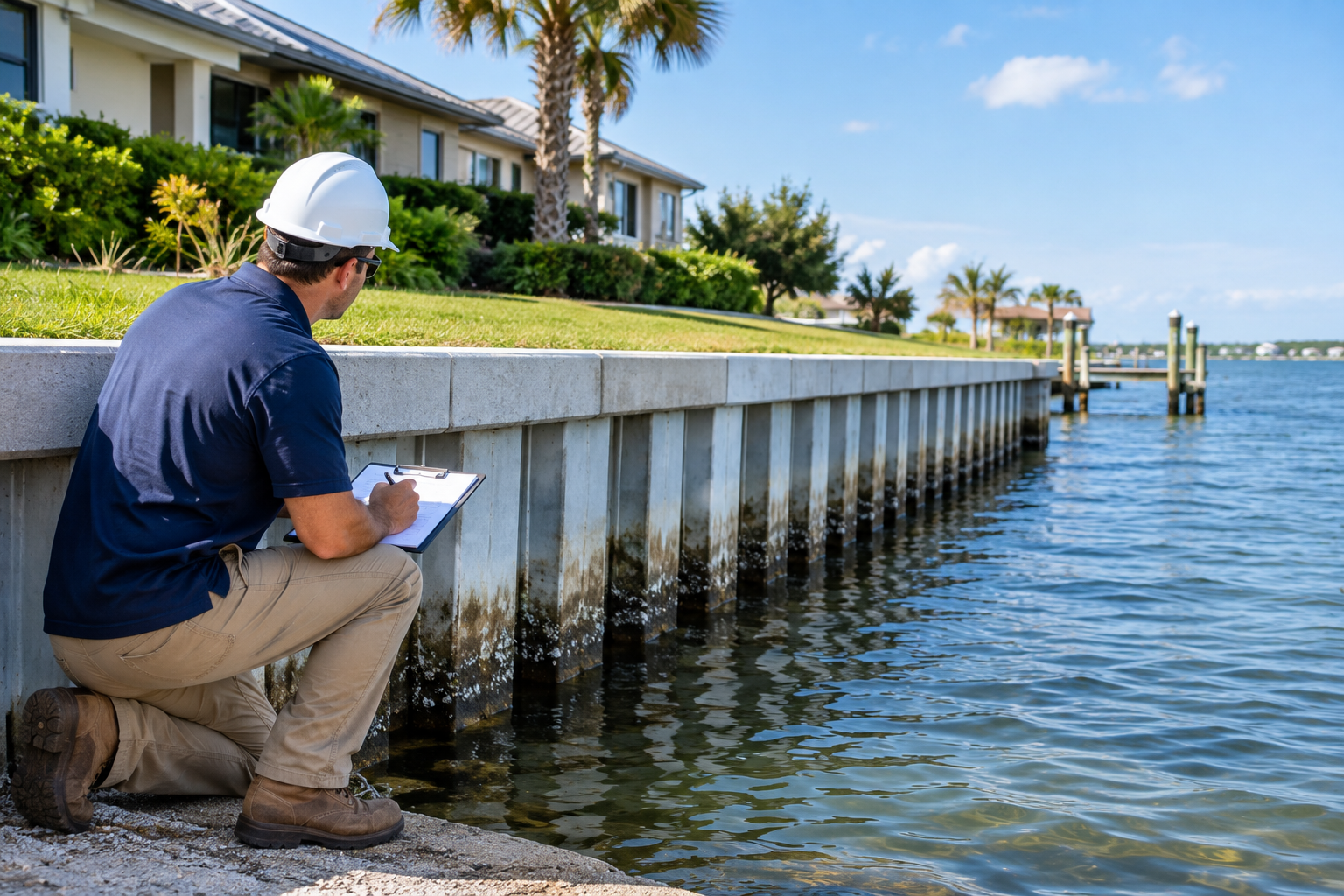
Visual Surface Assessment
A thorough check on the surface would be able to detect any warning signs of cracks, deformation, or corrosion. Bulkhead inspection at this level averts minor presentable damage against the emergence of major structural issues in the future.
It is important to focus on the main surface signs of damage including:
- Cracks or gaps
- Warped panel sections
- Rust stains visible
- Surface erosion marks
Visual inspections reinforce preventative maintenance and guarantee that shallow problems are spotted promptly. This prevents the bulkhead from degenerating over time and developing structural problems associated with time.
Check for Soil Erosion Behind Bulkhead
Soil conditions behind the structure directly impact its strength and stability. During bulkhead installation in Jacksonville, FL, projects, professionals carefully evaluate soil integrity to ensure proper support. Bulkhead inspections help detect erosion or sunken areas that can create pressure imbalances and lead to structural damage if not addressed early.
Keep a watch for signs of soil movement through:
- Sinkholes forming nearby
- Soil pulling away
- Depressions in the ground
- Water pooling areas
Keeping the soil firmly in place prevents shifting and makes the bulkhead more durable, so it can withstand the forces of nature. Therefore, this still offers good protection to the shoreline even as time goes by.
Inspect Tiebacks and Anchors
The bulkhead is attached with tiebacks and anchors to counteract the water pressure and is thus an essential structural component. Any poorly implemented connection can cause instability, shifting, and even eventual failure unless it is regularly checked.
Ensure to check the component carefully through:
- Loose anchor rods
- Corroded metal parts
- Misaligned connections found
- Signs of strain
Powerful anchoring systems will provide a firm, stable bulkhead, reducing the chances of structural movement. This maintains structural security in the long-term effects under continuous environmental pressure.
Evaluate Drainage Functionality
Drainage systems help to decongest around the structure. Bulkhead inspection is used to diagnose blocked or unproductive drainage locations that are either strong causes of stress, bulge, or structural damage over time.
Ensure to inspect the drainage closely through:
- Clogged weep holes
- Water retention buildup
- Sediment blocking the flow
- Poor drainage outlets
Effective drainage lowers the hydrostatic pressure and promotes structural health. This ensures that the bulkhead is effectively working without increased pressure due to water trapped on the backside of the system.
Look for Material Deterioration
The impact of material aging on overall time-based performance and durability. Bulkhead inspection is applicable in detecting early signs of wear, like avoiding rot, corrosion, or cracking, before they affect the effectiveness of the structure.
Ensure to address every material concerns, including:
- Wood rot patches
- Steel corrosion spreading
- Concrete cracking lines
- Coating breakdown areas
Quick detection of material damage enables prompt repair. This prolongs the life of the bulkhead whilst being a strong obstacle to environmental exposure and water-related stress.
Conclusion
Longshore protection is not just based on a few check-ups now and then, but it is based on a careful, regular process supported by knowledge and thoroughness. Each action of correct analysis reinforces the waterfront structure integrity and worries your investment over the long period of time.
At B&W Marine Construction, we offer reliable solutions built on experience, precision, and a deep understanding of waterfront systems. Contact us today and let our experts protect what matters most!
Frequently Asked Questions
How often should a professional bulkhead inspection be scheduled?
They should be inspected on a yearly basis and extra precautions taken following extreme storms or any abnormal water activity to prevent structural hazards.
What tools are used during a bulkhead inspection?
Probing, measuring, and taking photos with moisture detectors enable inspectors to accurately evaluate hidden damage and structural integrity.
Can minor bulkhead issues be fixed without full replacement?
Yes, local repairs such as sealing, reinforcement, component replacement, etc., can be effective for eliminating the trouble without reconstruction.