Waterfront Construction in Jacksonville, FL: Costs, Permits, Process, and What Property Owners Need to Know
Owning waterfront property in Jacksonville comes with a specific set of opportunities and responsibilities that inland properties simply don’t have to consider. Whether you’re building a new dock, installing a seawall, adding a boat lift, or planning a larger scale waterfront improvement, waterfront construction in Jacksonville involves its own permitting requirements, environmental considerations, and construction techniques suited to marine environments. Understanding these upfront helps property owners plan realistically and avoid costly surprises along the way.
Common Types of Waterfront Construction Projects
Docks
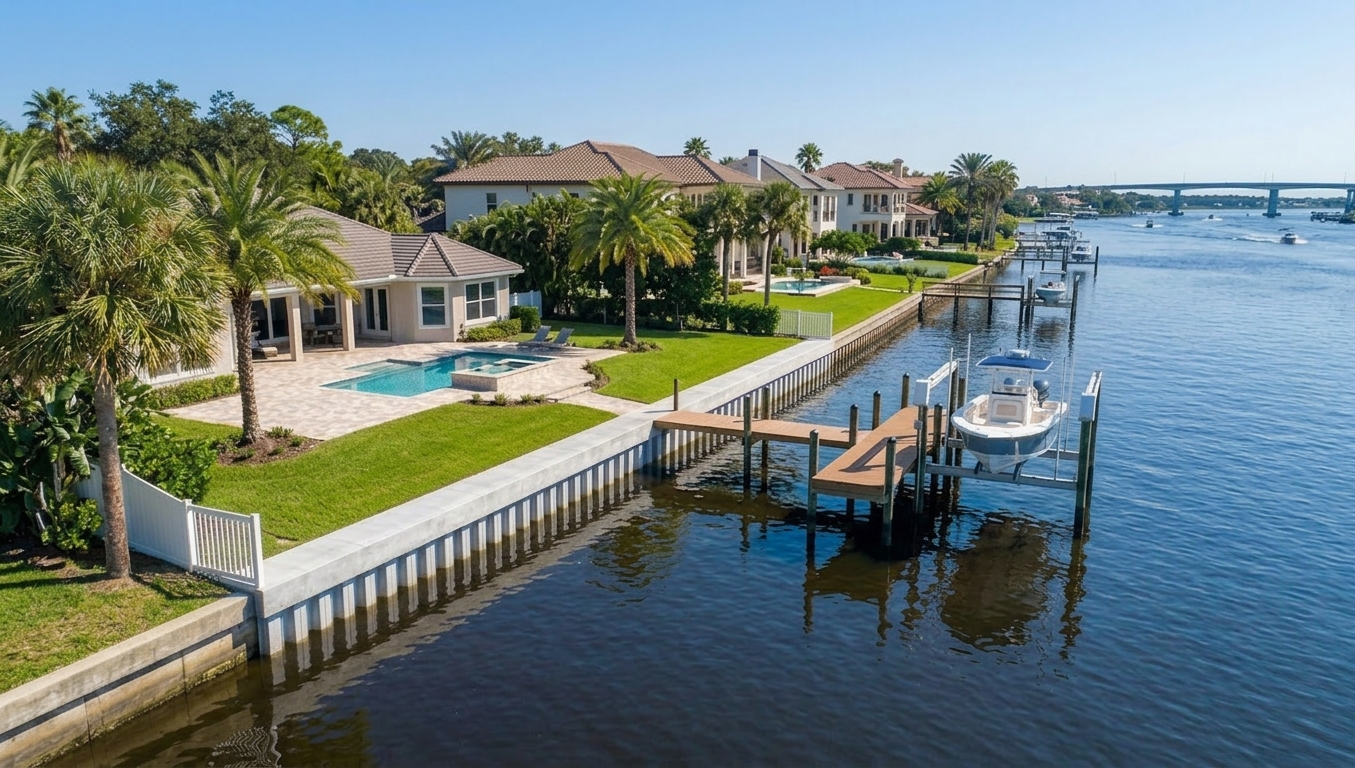
Docks provide direct water access for boating, fishing, or simply enjoying waterfront living, and can range from simple, functional structures to larger designs built for entertaining or accommodating multiple boats.
Seawalls and Bulkheads
These structures protect shoreline property from erosion, tidal movement, and storm related water intrusion, playing a critical role in preserving the long term stability of waterfront land.
Boat Lifts
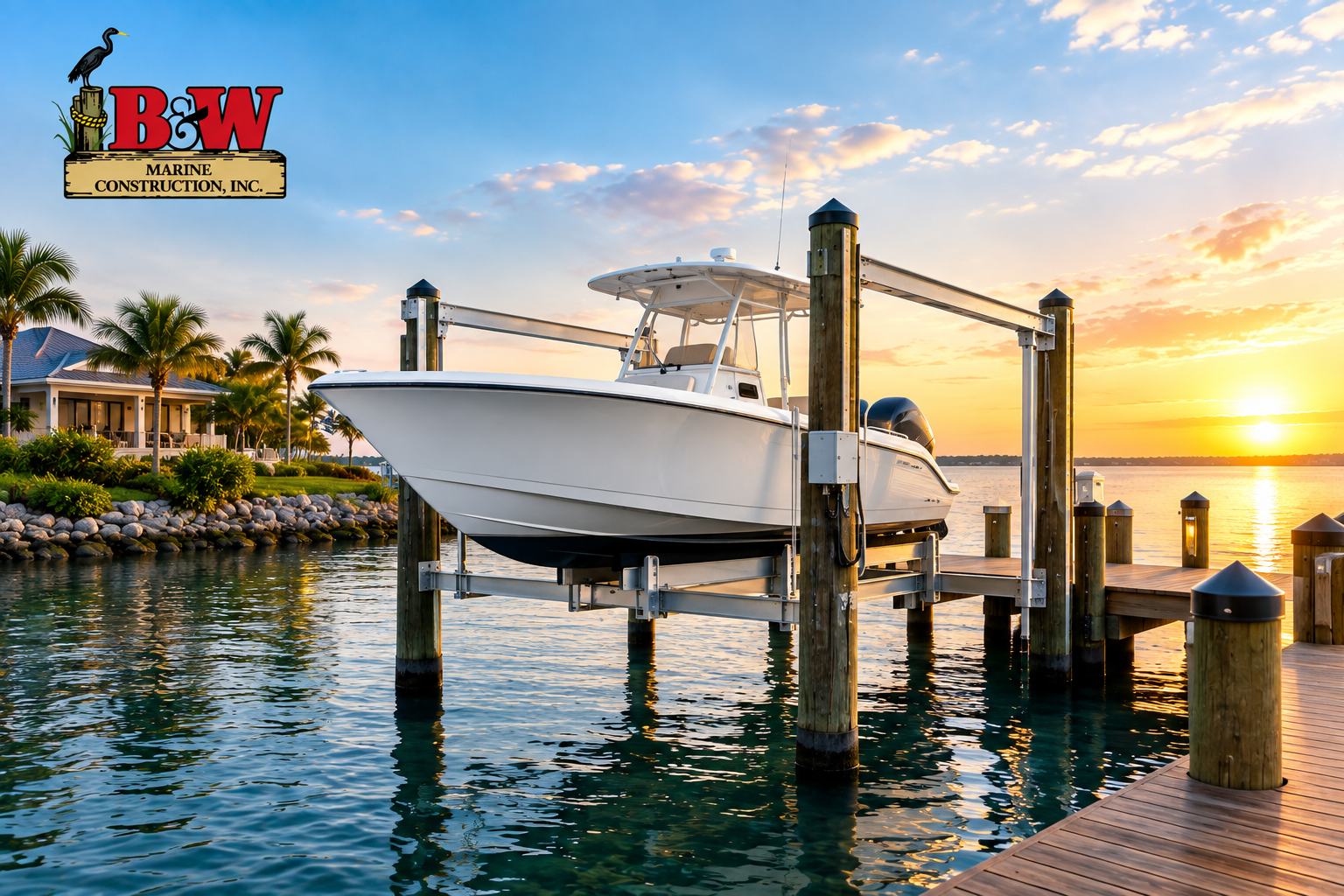
Boat lifts protect vessels from constant water exposure, extending their lifespan and reducing maintenance compared to leaving a boat moored in the water full time.
Piling Installation
Pilings serve as the structural foundation for docks, lifts, and other waterfront structures, requiring careful assessment of water depth and bottom conditions to ensure long term stability.
What Influences the Cost of Waterfront Construction
Costs vary significantly based on several factors specific to each project:
- Type and scope of the project, since a simple dock costs considerably less than a full seawall installation or larger scale construction
- Water depth and bottom conditions, which affect piling requirements and overall structural approach
- Material selection, with options like treated wood, composite materials, aluminum, or concrete each carrying different costs and durability profiles
- Site accessibility, since harder to reach waterfront locations can increase labor and equipment costs
- Permitting complexity, particularly relevant for projects affecting protected waterways or environmentally sensitive areas
Given this variability, a detailed, itemized estimate based on your specific property and project scope offers a far more accurate picture than general cost averages.
Understanding Permitting Requirements
Waterfront construction in Florida typically requires permits from multiple levels of oversight, potentially including local municipal authorities, the state, and in some cases federal agencies, particularly when a project affects protected waterways or environmentally sensitive habitats. This permitting process considers factors like environmental impact, navigational considerations, and structural safety requirements.
Working with a contractor experienced specifically in local waterfront permitting significantly reduces the risk of delays or compliance issues, since they already understand the documentation and approval process specific to Jacksonville area waterways.
What the Construction Process Typically Looks Like
Initial Site Assessment
This stage involves evaluating water depth, bottom conditions, and existing shoreline or structural conditions relevant to your specific project.
Design and Permitting
Once the project scope is defined, the appropriate permits are prepared and submitted, a stage that can take anywhere from a few weeks to several months depending on the project’s complexity and regulatory requirements.
Construction
After permitting approval, construction begins, with timelines varying significantly based on project size, scope, and weather related considerations common to marine construction.
Final Inspection
Once construction is complete, a final inspection typically confirms the project meets all applicable codes and permit requirements before it’s considered fully finished.
Why Waterfront Construction Requires Specialized Expertise
Marine construction involves unique challenges that standard land based contractors typically aren’t equipped to handle, working with water dynamics, tidal movement, specialized materials, and structural considerations specific to supporting weight and stability in or near water. Choosing a contractor with genuine marine construction experience, rather than general contracting experience alone, significantly affects both the quality and long term durability of the finished project.
Final Thoughts
Waterfront construction in Jacksonville offers real opportunities to enhance how a property functions and holds its value, but it comes with specific cost, permitting, and construction considerations that differ meaningfully from standard land based projects. Working with an experienced marine construction contractor helps property owners navigate this process smoothly, from initial planning through final inspection.
If you’re planning a waterfront construction project, B&W MARINE CONSTRUCTION offers a range of waterfront construction services built around the specific needs of Jacksonville area properties.
Frequently Asked Questions
1. Do all waterfront construction projects in Jacksonville require permits?
In most cases, yes, particularly for projects affecting shorelines or waterways, though the specific permitting requirements depend on the type and scope of the project.
2. How long does the permitting process typically take for waterfront construction?
This varies based on project complexity, but it can range from a few weeks to several months, particularly for projects involving more significant environmental or structural considerations.
3. How much does waterfront construction typically cost in Jacksonville?
Costs vary widely depending on the type of project, materials used, and site-specific conditions, so a detailed, itemized estimate from a local marine construction contractor is the most reliable way to understand realistic pricing.
4. Why can’t a general contractor handle waterfront construction projects?
Marine construction involves specialized knowledge of water dynamics, materials suited to constant water exposure, and specific structural considerations that general land based contracting experience doesn’t typically cover.
5. What’s the most common type of waterfront construction project for residential properties?
Docks and seawalls tend to be among the most common projects, addressing water access and shoreline protection respectively, though specific needs vary based on each property’s location and condition.