Boat Lift Maintenance vs. Repair: How Do You Know What Your Lift Needs?
Standing at the dock looking at a boat lift that’s not quite working right, most owners face the same uncertainty: is this something a routine check-up would catch and prevent, or has it already crossed into repair territory? Boat lift maintenance and repair aren’t the same service, and knowing which one your situation actually calls for helps you address the issue appropriately, rather than either overpaying for a repair that maintenance could have prevented, or underestimating a problem that’s become more serious than routine upkeep can fix.
Here’s how to tell the difference, and why understanding it matters.
What Boat Lift Maintenance Actually Covers
Maintenance refers to routine, preventive care performed on a regular schedule, regardless of whether anything appears to be wrong. This typically includes:
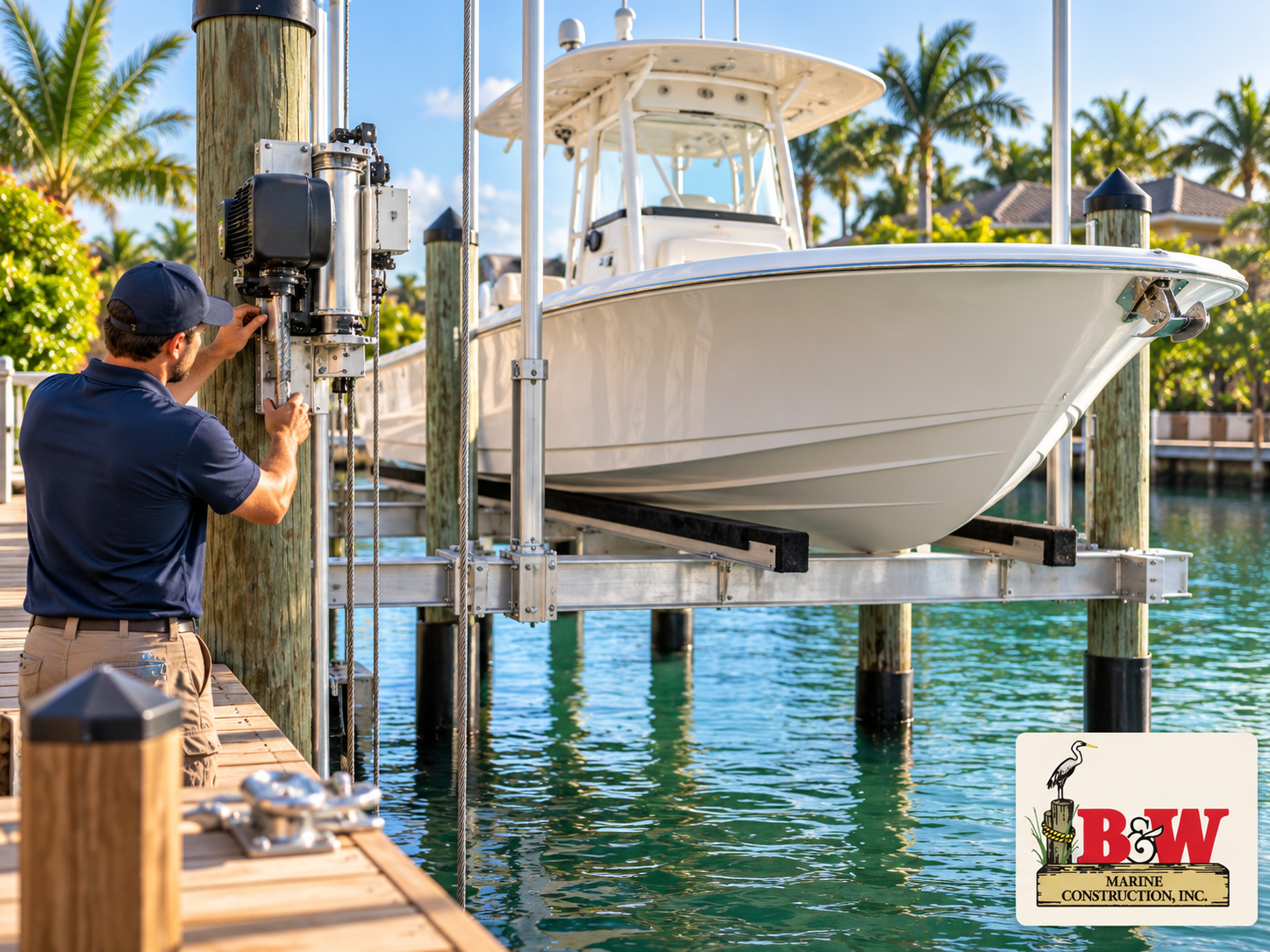
- Visual inspection of cables, pulleys, and structural components for early signs of wear
- Lubrication of moving parts to reduce friction and prevent premature wear
- Motor performance checks, ensuring smooth, consistent operation
- Corrosion assessment, particularly important given saltwater and humidity exposure
- Minor adjustments, like realigning components that have shifted slightly out of position
The goal of maintenance is to catch small issues early and keep the system operating smoothly, preventing the kind of gradual wear that eventually leads to bigger, more expensive problems.
What Boat Lift Repair Actually Covers
Repair addresses a specific, existing problem, something has already gone wrong, and the lift needs to be fixed to restore normal function. This typically includes:
- Replacing worn or damaged cables
- Motor repair or replacement
- Fixing electrical issues, such as faulty wiring or switches
- Addressing structural damage, like compromised pilings or frame components
- Correcting uneven lifting caused by cable stretch or mechanical misalignment
Repair is reactive by nature, addressing a problem that’s already affecting the lift’s performance or safety.
How to Tell Which One Your Lift Actually Needs
If Everything Seems to Be Working, But It’s Been a While
If your lift is functioning normally but hasn’t been inspected recently, this points toward scheduling routine maintenance, catching small issues before they become bigger problems, rather than waiting for something to visibly go wrong.
If You’re Noticing Early Warning Signs
Slight noises, minor inconsistencies in movement, or early signs of wear on visible components often indicate it’s time for a maintenance check, which can address these early signs before they progress into an actual failure requiring repair.
If the Lift Has Stopped Working Properly
A lift that won’t raise or lower, moves unevenly, or shows clear signs of damage has moved beyond routine maintenance and needs repair to restore proper function.
If You See Visible Damage
Frayed cables, visible rust or corrosion beyond surface level, or structural damage to pilings or framing indicate a repair is needed, rather than routine preventive care.
Why Regular Maintenance Reduces the Need for Repairs
Consistent maintenance directly reduces how often significant repairs become necessary. Catching cable wear early, keeping components properly lubricated, and addressing minor corrosion before it spreads all help prevent the kind of gradual deterioration that eventually requires a full repair. Boat lift owners who maintain a regular inspection schedule generally face fewer, less severe repair needs over the life of their lift compared to those who wait until something visibly breaks.
A Practical Way to Think About It
Maintenance is what you do to avoid needing repair. Repair is what happens when maintenance either wasn’t performed, or wasn’t enough to prevent a specific component from failing. Both are necessary at different points in a lift’s lifespan, but leaning more heavily on consistent maintenance tends to reduce both the frequency and cost of repairs over time.
How Often Should Maintenance Be Performed?
Most professionals recommend at least an annual maintenance inspection, with more frequent checks recommended for lifts in particularly harsh saltwater environments or those used heavily throughout the year.
Final Thoughts
Understanding the difference between boat lift maintenance and repair helps you address issues at the right stage, catching small problems early through routine care, rather than waiting until a more serious, costly repair becomes necessary. Regular maintenance is one of the most effective ways to protect your investment and extend the lifespan of your lift.
If it’s time for a maintenance check, or you’re noticing signs that repair may be needed, BW Marine Construction offers boat lift maintenance services designed to keep your lift running safely and reliably.
Frequently Asked Questions
1. How often should I schedule boat lift maintenance?
Most professionals recommend at least an annual inspection, with more frequent checks for lifts in harsher saltwater environments or heavier use situations.
2. Can regular maintenance really prevent the need for repairs?
Yes, catching early signs of wear, like minor cable fraying or corrosion, through routine maintenance often prevents these issues from progressing into more significant, costly repairs.
3. What’s a clear sign that my lift needs repair rather than just maintenance?
Visible damage, like frayed cables or significant corrosion, uneven lifting, or a lift that won’t operate at all, all indicate the situation has moved beyond routine maintenance.
4. Is maintenance less expensive than repair?
Generally, yes, routine maintenance tends to cost significantly less than addressing a full repair, particularly since maintenance often prevents the kind of damage that leads to more expensive repairs later.
5. Can I perform basic boat lift maintenance myself?
Some basic visual inspection can be done by owners, but thorough maintenance, particularly involving electrical components or structural assessment, is generally safer and more effectively handled by a professional.