How Much Does Seawall Replacement Cost?
Once a seawall starts showing real signs of failure, leaning, cracking, visible erosion behind the structure, the question quickly shifts from “should I replace this” to “what is this actually going to cost.” Seawall replacement pricing varies more than most homeowners expect, since it depends on several property specific factors rather than a single standard rate. Understanding what actually drives cost helps you evaluate quotes more confidently and budget realistically for the project.
Here’s a breakdown of what influences seawall replacement pricing, and what property owners should generally expect.
What Actually Drives Seawall Replacement Cost
Length of the Seawall
This is typically the most significant cost factor, since pricing is often calculated per linear foot. A longer shoreline naturally requires more materials and labor than a shorter one.
Material Choice
Different seawall materials come with different price points:
- Vinyl tends to be a more budget friendly option with decent durability
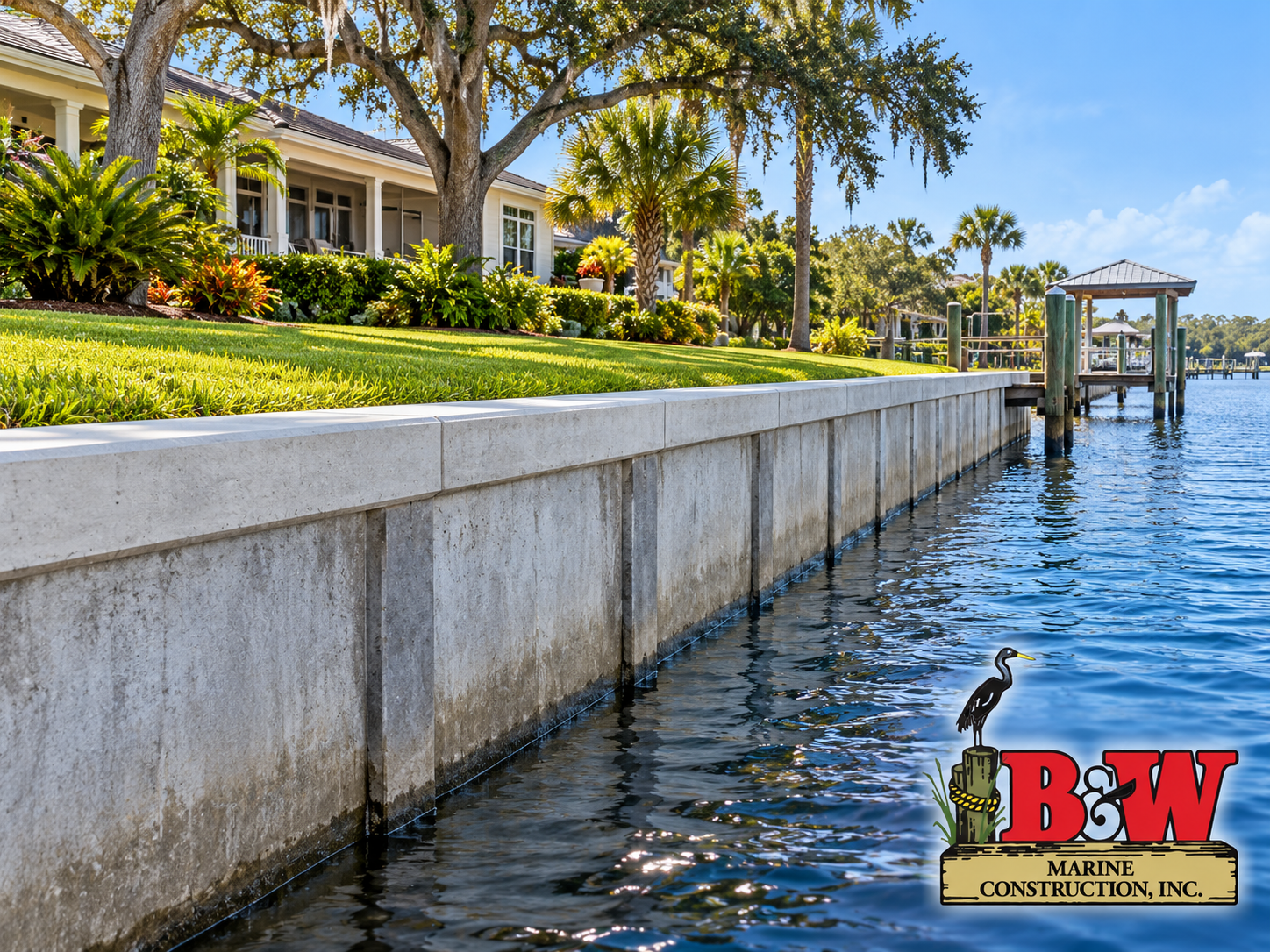
- Concrete generally costs more upfront but offers strong durability and longevity
- Steel often falls in a mid to higher price range, valued for its strength
- Treated wood can be more affordable initially but may require more frequent maintenance or replacement over time
Site Accessibility
Properties with difficult water or land access for construction equipment typically face higher costs due to the added labor and logistical complexity involved.
Water Depth and Soil Conditions
The specific water depth and soil composition at your property affect how the seawall needs to be engineered, deeper water or unstable soil conditions can require more extensive structural work, increasing overall cost.
Extent of Existing Damage
If the current seawall failure has already caused erosion or damage extending beyond the wall itself, addressing this additional damage adds to the overall project cost beyond just the wall replacement itself.
Permitting Complexity
Permitting requirements and associated costs can vary based on your specific location and any environmental considerations tied to your particular waterway.
General Cost Ranges to Expect
While exact pricing requires a property specific assessment, seawall replacement is generally priced per linear foot, with costs varying significantly based on the material chosen and site specific conditions described above. Vinyl tends to represent the more affordable end of the range, while concrete and steel options typically involve higher costs reflecting their durability and structural requirements.
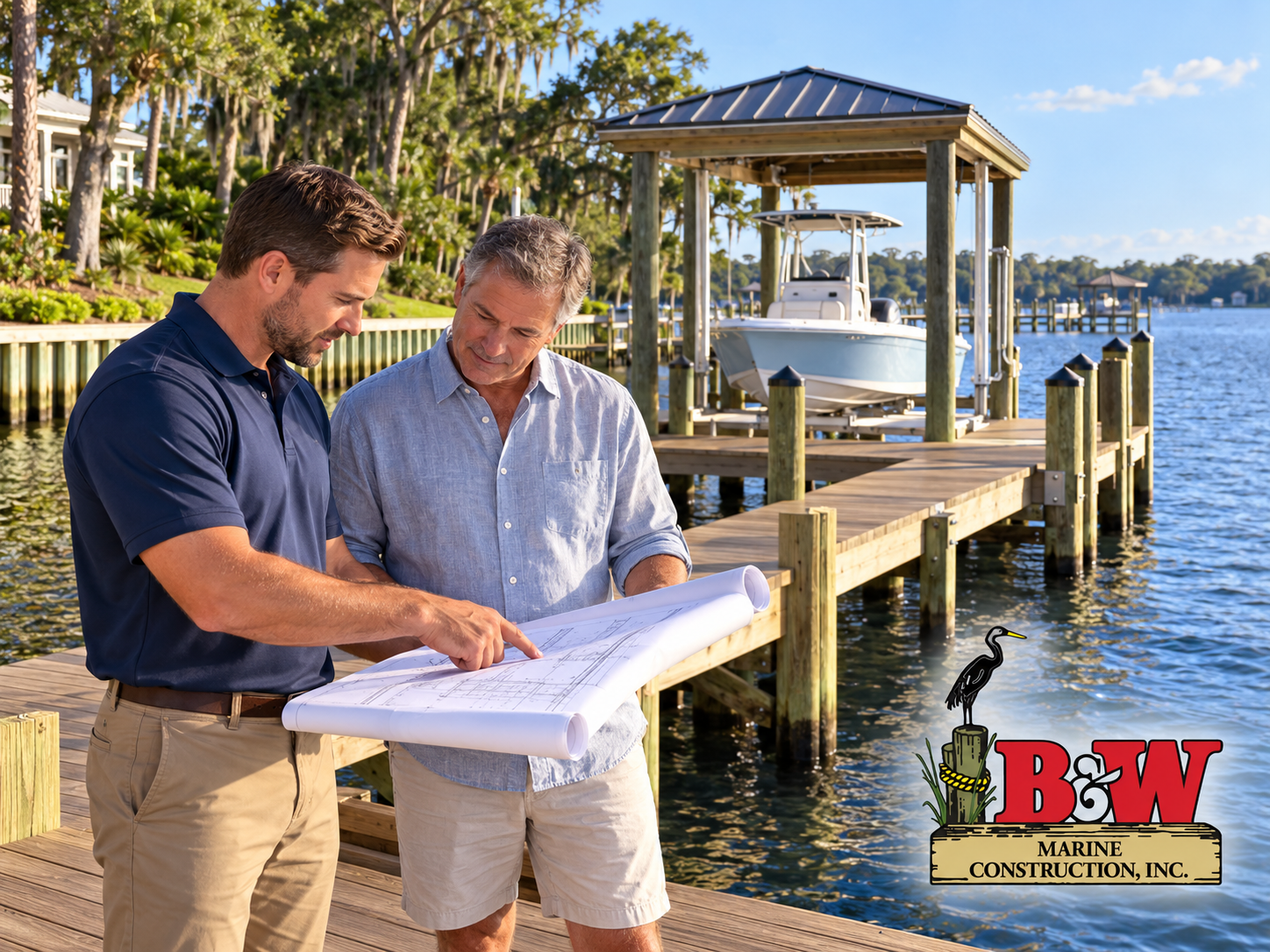
Rather than relying on general online estimates, which often don’t account for your property’s specific conditions, requesting a detailed, itemized quote based on an actual site assessment gives a far more accurate picture of realistic costs for your situation.
Why Getting Multiple Quotes Matters
Given how much seawall replacement costs can vary based on property specific factors, getting quotes from a few different contractors helps you understand the realistic range for your specific situation, rather than relying on a single estimate that may or may not reflect competitive, accurate pricing.
What Should Be Included in a Proper Quote
A thorough, trustworthy quote should clearly break down:
- Material costs specific to your chosen seawall type
- Labor costs for demolition of the existing structure and installation of the new one
- Any permitting fees or associated costs
- Additional costs for addressing existing erosion or damage beyond the wall itself
- A realistic project timeline
Why Cheaper Isn’t Always Better
An unusually low quote compared to others you’ve received is worth examining carefully, sometimes this reflects lower quality materials, insufficient structural engineering for your specific site conditions, or hidden costs that surface later in the project. Given how much a seawall protects your property from ongoing erosion and water damage, this is an area where cutting costs too aggressively can lead to a shorter lifespan structure and more expensive problems down the line.
How to Budget Realistically for This Project
Rather than budgeting based on a single estimate, get a proper site assessment and detailed quotes from a few experienced marine construction contractors, then plan for some additional flexibility in your budget in case the project reveals additional erosion or damage once work begins.
Final Thoughts
Seawall replacement cost depends heavily on your specific property’s length, material choice, site conditions, and the extent of any existing damage, making a detailed, property specific quote far more useful than general cost averages. Given how significant this investment is in protecting your waterfront property long term, taking time to get multiple thorough quotes and understanding exactly what’s included pays off considerably.
If you’re planning a seawall replacement project, B&W Marine Construction offers seawall and bulkhead construction services with detailed, property specific quotes for Jacksonville area waterfront properties.
Frequently Asked Questions
1. What’s the most cost-effective seawall material?
Vinyl generally represents a more budget friendly option compared to concrete or steel, though the right choice depends on your specific durability needs and site conditions, not just upfront cost.
2. Why do seawall replacement quotes vary so much between contractors?
Pricing depends heavily on property specific factors, length, material, site accessibility, and soil conditions, so quotes can vary significantly based on how each contractor assesses your particular situation.
3. Does existing erosion damage add to seawall replacement costs?
Yes, if erosion has already caused damage beyond the wall itself, addressing this additional damage typically adds to the overall project cost.
4. Should I be concerned about an unusually low seawall replacement quote?
It’s worth examining carefully, unusually low pricing can sometimes reflect lower quality materials or insufficient engineering for your specific site conditions, which could lead to more costly problems later.
5. How can I get an accurate cost estimate for my specific property?
The most reliable way is to request a detailed, itemized quote following an actual site assessment, rather than relying on general online cost averages that don’t account for your property’s specific conditions.