Boat Lift Installation: Everything You Need to Know Before Installing a Boat Lift
For anyone who keeps a boat on the water in Northeast Florida, a boat lift is one of the most practical investments a waterfront property owner can make. Leaving a vessel in the water exposes it to constant hull fouling, osmotic blistering, corrosion from saltwater, and accelerated wear on the running gear. A properly installed boat lift eliminates most of that, extending the life of the boat and reducing the ongoing maintenance cost considerably.
But boat lift installation is not as straightforward as picking a model and bolting it to the dock. The right lift for your boat, your dock, and your waterway depends on several factors that are worth understanding before you commit to a purchase.
Capacity Is the Starting Point
Every boat lift has a rated lift capacity, and selecting the right capacity is the most important decision in the process. The rule of thumb is to choose a lift rated for at least 10 to 20 percent more than your boat’s actual weight, including a full fuel tank, gear, and any equipment stored onboard. Running a lift at or near its maximum capacity puts unnecessary stress on the motor, cables, and bunks, and shortens the system’s operational life.
Weigh your boat as it is typically loaded, not at its minimum spec. Waterfront property owners who upgrade to a larger vessel after installation sometimes discover the lift they purchased is no longer adequate, so if you are considering a larger boat in the future, factor that into the capacity decision now.
Lift Types and Which One Fits Your Situation
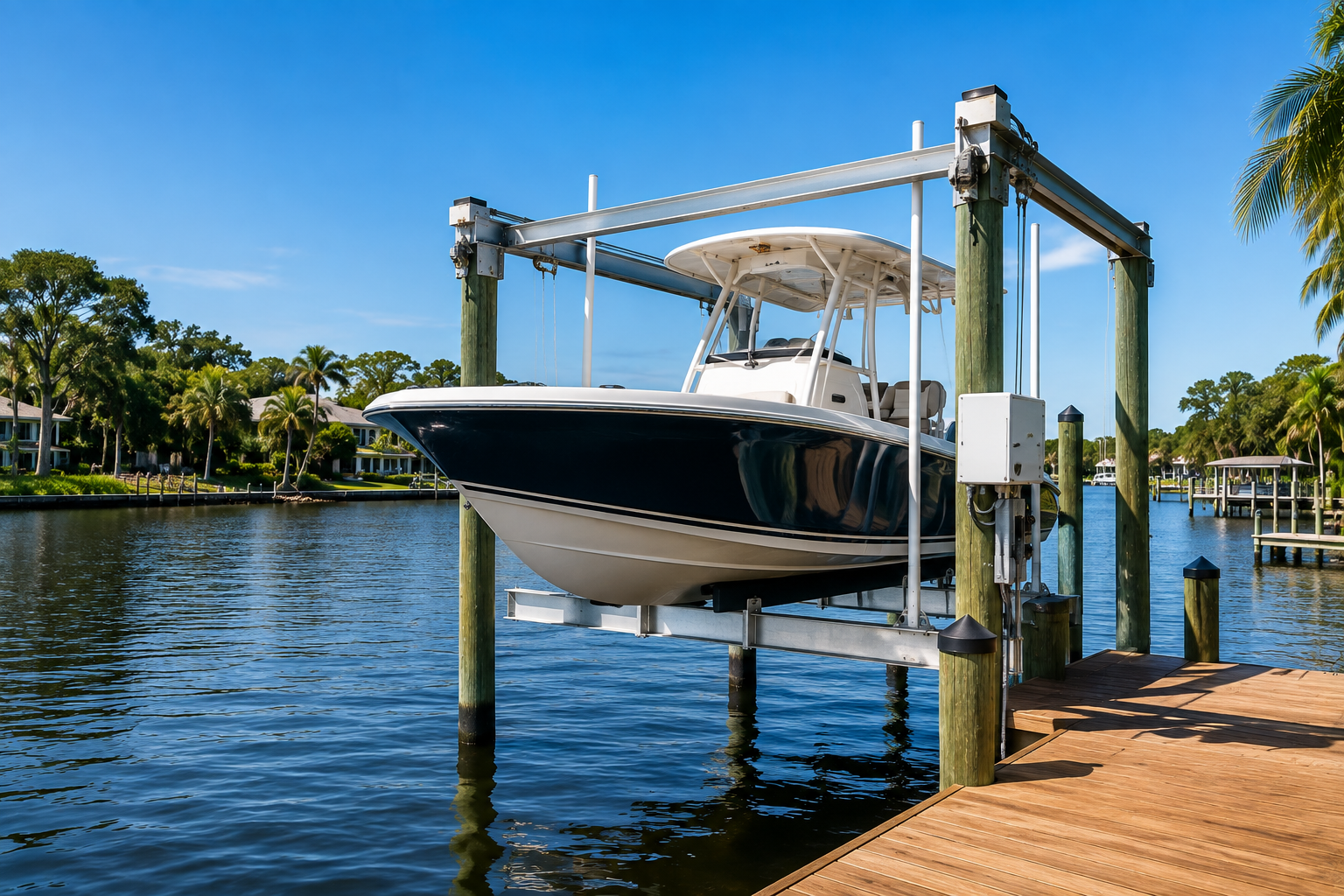
The two most common residential configurations are cradle lifts, which support the hull from below on a series of padded bunks or rollers, and sling lifts, which support the hull in a fabric sling. Cradle lifts are generally preferred for powerboats and are more common in the Jacksonville area. Sling lifts suit certain hull shapes, particularly sailboats and vessels with deep keels.
Freestanding four-post lifts are the most popular configuration for open dock installations. Floating lifts work well where water depth fluctuates significantly with tidal movement or where a fixed piling installation is not practical. Your contractor should assess water depth, tidal range, bottom conditions, and the specific dock configuration before recommending a lift type.
What the Installation Process Involves
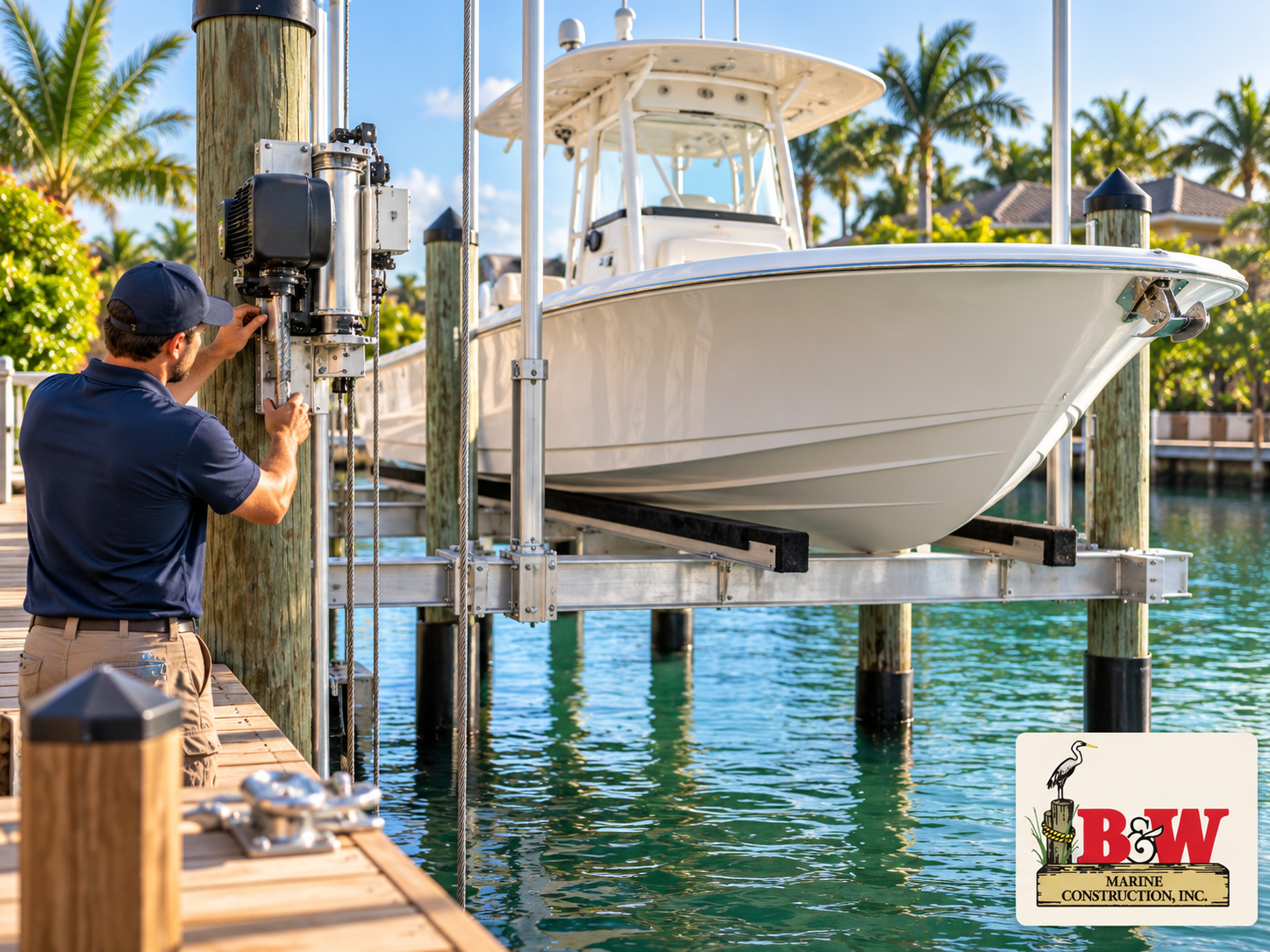
A professional boat lift installation involves more than setting the lift in place. The lift must be positioned correctly relative to the dock, levelled precisely, and connected to an electrical supply with appropriate weatherproofing and safety disconnects. In Florida, electrical work near the water is subject to specific code requirements that protect against electric shock drowning, a serious risk in freshwater environments where stray current can accumulate.
Most boat lift installations also require a permit from the local building department. A contractor handling the permitting process on your behalf ensures the installation meets code requirements, which matters for your insurance coverage and for any future sale of the property.
Maintenance After Installation
A boat lift is a mechanical system operating in a demanding marine environment. Regular inspection of cables, bunks, pulleys, and motor components extends the life of the system. Cables should be inspected annually for wear and fraying. Bunks and rollers should be checked for deterioration. Most manufacturers recommend professional servicing every few years to address wear before it becomes a failure.
B&W Marine Construction has been installing boat lifts across Jacksonville and Northeast Florida since 1981. Their team assesses your waterfront setup, recommends the right lift for your vessel and dock configuration, manages all permits, and handles professional installation built to Florida’s marine environment standards. Licence No. CRC1328897.
Call (904) 387-4814 or visit bwmarineconstruction.com/service/boat-lifts to request your free estimate.