Floating Dock Maintenance: How to Extend the Life of Your Dock
Floating docks offer a genuine advantage over fixed docks in areas with fluctuating water levels, rising and falling naturally with the water rather than facing the structural stress that comes with significant tidal or seasonal water level changes. But that flexibility doesn’t mean floating docks are maintenance free. Whether you’re researching floating dock installation for a new waterfront property or already own one, understanding what ongoing maintenance actually involves helps ensure your investment lasts as long as possible.
Here’s a practical breakdown of what floating dock maintenance involves, and how it connects to getting the installation right from the start.
Why Floating Docks Have Unique Maintenance Needs
Unlike fixed docks anchored directly to pilings, floating docks rely on flotation devices, anchoring systems, and connection points between sections, each of which requires its own specific attention over time. The constant movement floating docks experience, rising and falling with water levels and shifting with wave action, creates wear patterns different from what a stationary structure faces.
Key Maintenance Areas for Floating Docks
Flotation System Inspection
The flotation components, whether foam filled, air filled, or another buoyancy method, should be periodically inspected for damage, leaks, or reduced buoyancy, since compromised flotation directly affects how well the dock actually functions.
Anchoring and Mooring Systems
Floating docks are typically secured through anchoring systems, chains, cables, or piling guides, that allow movement while keeping the dock in position. These components should be checked regularly for wear, corrosion, or loosening connections.
Connection Points Between Sections
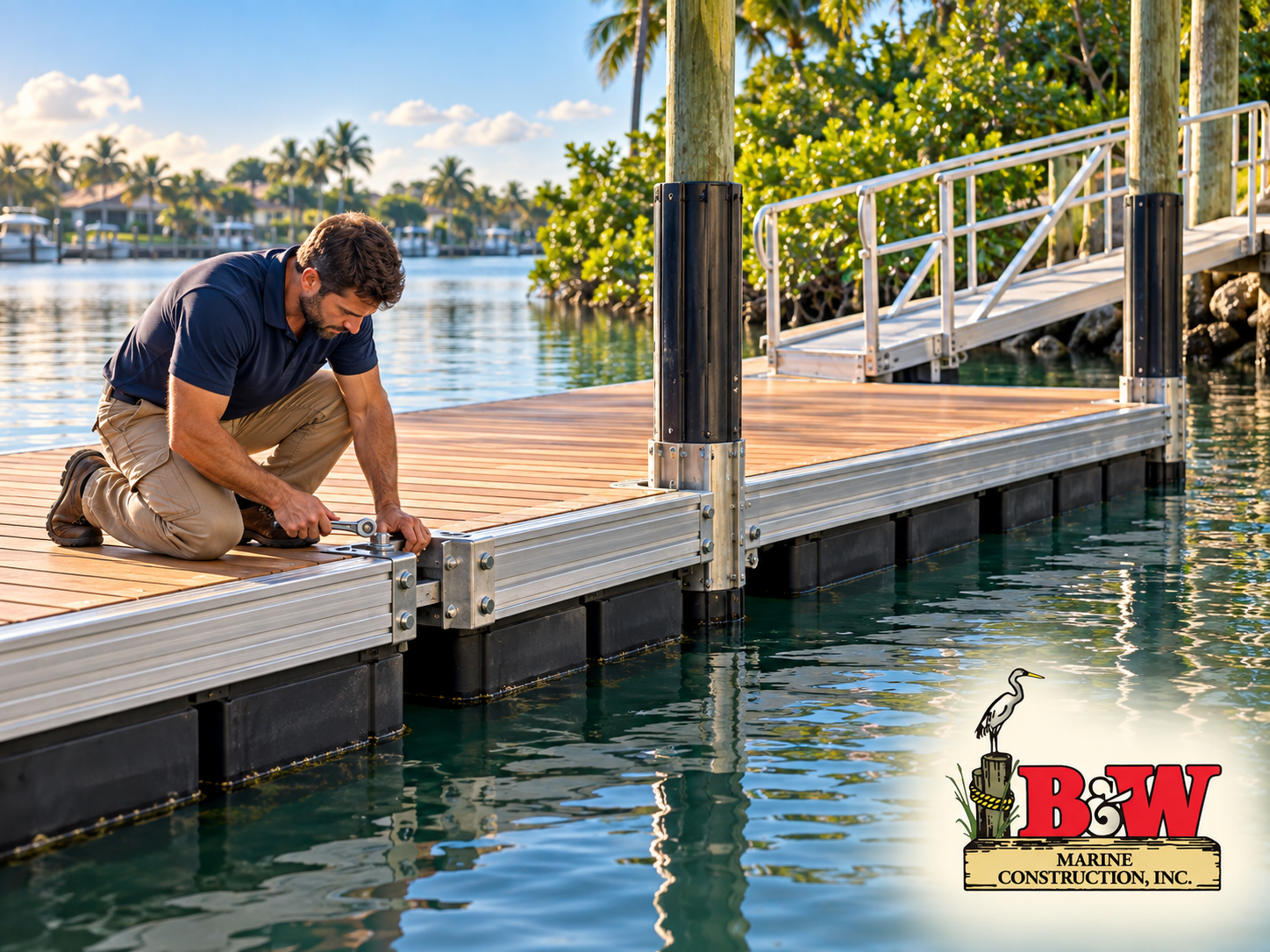
For multi section floating docks, the hardware connecting individual sections experiences ongoing stress from movement and needs periodic inspection to ensure connections remain secure and properly aligned.
Decking Material Condition
Whether your dock uses wood, composite, or another decking material, regular inspection for wear, splintering, or water damage helps catch issues before they become safety concerns.
Hardware and Fastener Checks
Bolts, screws, and other fasteners can loosen over time due to constant movement, periodic tightening and inspection helps prevent more significant structural issues from developing.
How Often Should Floating Dock Maintenance Be Performed?
A general inspection every few months, with a more thorough seasonal check, particularly before and after periods of heavy use or severe weather, helps catch issues early. Saltwater environments in particular warrant more frequent inspection given the accelerated corrosion risk compared to freshwater settings.
Common Signs Your Floating Dock Needs Attention
- Uneven flotation, where one section sits noticeably lower in the water than others
- Visible wear or damage to connection hardware between sections
- Loose or shifting anchoring components
- Splintering, soft spots, or visible damage to the decking surface
- Unusual movement or instability beyond normal water related motion
How Proper Installation Affects Long Term Maintenance Needs
A well-executed floating dock installation from the start significantly reduces the maintenance burden down the line. Proper anchoring system design suited to your specific water conditions, quality flotation components, and secure, well-engineered connection points all contribute to a dock that requires less frequent, less intensive maintenance over its lifespan compared to one installed without these considerations properly addressed.
This is part of why choosing an experienced marine construction company for floating dock installation matters just as much as the ongoing maintenance that follows, a well built foundation makes long term upkeep considerably easier.
Simple Habits That Extend Your Dock’s Lifespan
- Perform visual inspections regularly, rather than waiting for an obvious problem to appear
- Address minor issues promptly, since small problems tend to worsen when left unaddressed
- Keep the dock clear of excessive debris accumulation, which can add unnecessary weight and stress
- Schedule a professional inspection periodically, particularly for anchoring systems and structural connections that aren’t always easy to assess without experience
Final Thoughts
Floating docks offer real advantages for properties dealing with fluctuating water levels, but getting the most out of that investment requires consistent attention to flotation systems, anchoring, connections, and decking condition. Combined with a properly executed installation from the start, regular maintenance significantly extends how long your dock performs safely and reliably.
If you’re planning a new floating dock installation or need maintenance support for an existing one, B&W Marine Construction offers dock construction and maintenance services for waterfront properties.
Frequently Asked Questions
1. How often should a floating dock be inspected?
A general inspection every few months, with a more thorough seasonal check, is generally recommended, with more frequent inspection warranted in saltwater environments.
2. What’s the biggest maintenance difference between floating and fixed docks?
Floating docks require attention to flotation systems and anchoring components that accommodate movement, while fixed docks focus more on piling and structural stability, since they don’t move with water levels.
3. Can a poorly installed floating dock lead to more frequent maintenance needs?
Yes, proper installation with quality components and appropriate anchoring design significantly reduces long term maintenance requirements compared to a dock installed without these considerations.
4. What are the most common signs a floating dock needs professional attention?
Uneven flotation, visible hardware wear, loose anchoring components, and decking damage are all signs that professional inspection or repair may be needed.
5. Does saltwater exposure really make that big of a difference in maintenance frequency?
Yes, saltwater accelerates corrosion on metal components significantly compared to freshwater environments, making more frequent inspection and maintenance particularly important for saltwater installations.