
The Ultimate Guide to Seawall Inspection and Maintenance
Coastal and waterfront properties face constant, often unseen pressure from tidal forces, shifting soil, and hydrostatic buildup. While seawalls serve as a critical line of defense, their condition is frequently overlooked until costly repairs are unavoidable. Proactive seawall inspection and routine maintenance are essential to protecting shoreline stability, property value, and long-term safety. This guide explains how seawalls work, what damage looks like, and how proper inspections prevent structural failure.
Understanding the Different Types of Seawalls
- Concrete Seawalls
Reinforced concrete seawalls are known for durability and long-term strength in high-impact tidal environments. However, surface cracking, spalling, and joint deterioration can develop over time. Regular inspections are vital to identifying early warning signs before structural integrity is compromised.
- Vinyl Panel Seawalls
Vinyl seawalls offer flexibility and excellent resistance to saltwater corrosion. While low-maintenance, they still require periodic inspection to confirm panel alignment, anchoring strength, and soil retention. Many waterfront owners include vinyl systems in routine dock and bulkhead inspection schedules to ensure lasting performance.
- Steel Sheet Seawalls
Steel sheet pile seawalls provide high-load structural support and are commonly used in demanding marine environments. Corrosion, especially near tie-backs and connections, is a common concern. Scheduled inspections help slow deterioration and extend service life through targeted maintenance.

Common Signs of Seawall Damage
- Soil Loss and Sinkholes
The presence of soil gaps or depressions close to the seawall is a sign of concealed washout, which may cause instability of the supporting ground. These problems tend to indicate deeper structural issues forming behind the wall and need to be evaluated promptly to prevent escalation.
- Panel Movement or Bowing
Visible leaning, bending, or bulging panels indicate internal pressure exceeding design limits. These conditions require immediate evaluation and are frequently identified during professional bulkhead inspections.
- Cracking and Fractures
Cracks along the cap, face, or vertical seams allow water intrusion and accelerate internal erosion. Early repair prevents moisture infiltration from escalating into foundational instability.
How to Perform a Proper Seawall Inspection
Visual Surface Assessment
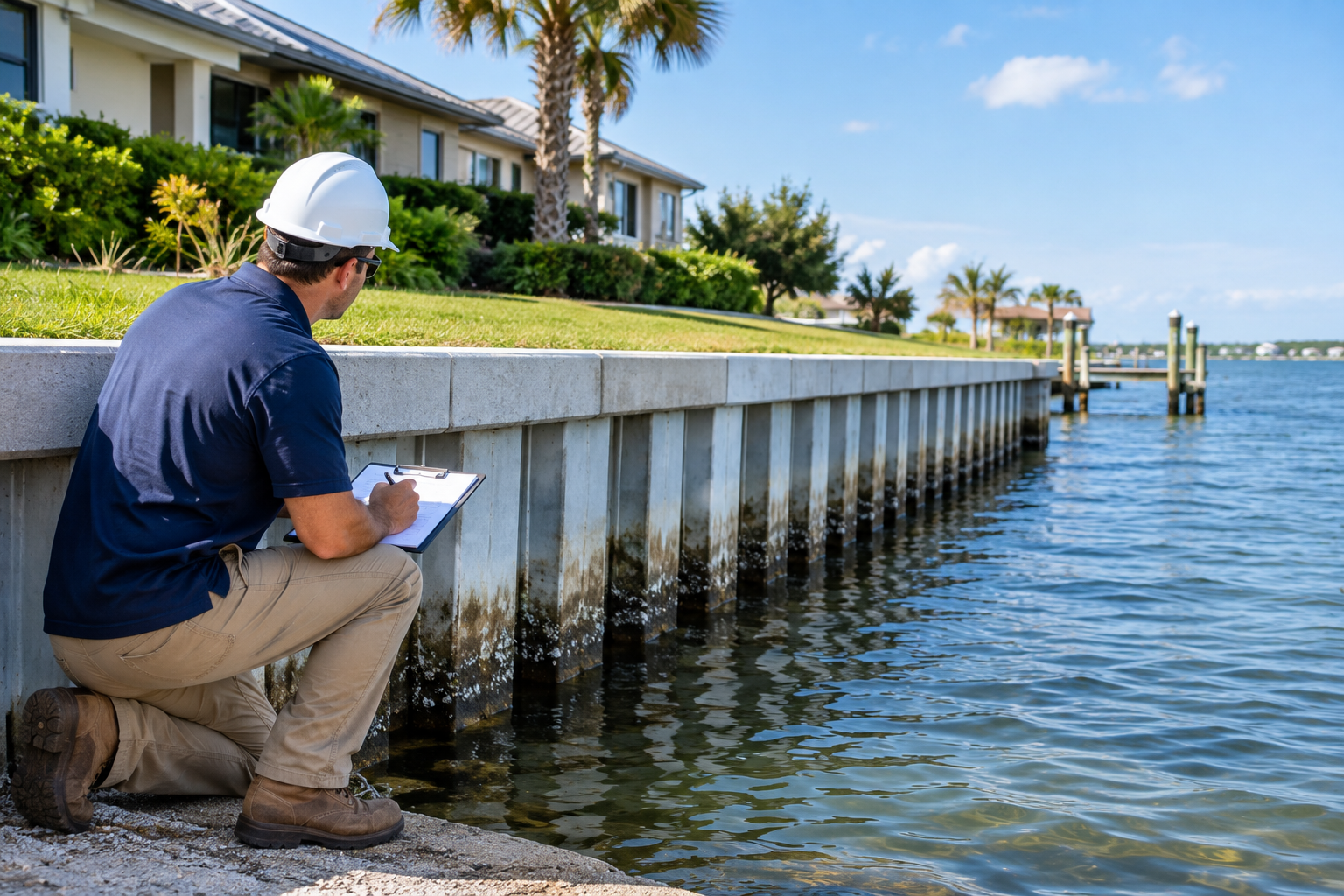
Begin with a thorough land-side review of the seawall surface, noting cracks, exposed materials, or loose components. Surface changes often reveal underlying stress points.
Waterside Evaluation
Inspecting the water-facing side identifies undermining, joint displacement, and erosion patterns not visible from shore. Marine professionals pay close attention to tie-back locations and joint seams during seawall inspections.
Soil Condition Review
Monitoring soil stability behind the wall is critical. Sudden settling, soft spots, or movement suggest water migration and internal washout that threaten long-term performance.
Joints and Hardware Inspection
Fasteners, joints, and anchoring systems should be examined for corrosion or loosening. Stress in these areas often signals increasing hydrostatic pressure or shifting soils.
Drainage System Check
Proper drainage relieves water pressure behind the seawall. Blocked weep holes or damaged outlets accelerate deterioration and must be cleared to maintain structural balance.
Structural Alignment Analysis
Leaning, bulging, or shifting indicates possible soil failure or anchor system compromise. Marine professionals commonly pair alignment reviews with comprehensive bulkhead inspections to deliver a complete structural assessment.
Seawall Cap Integrity
The cap protects the upper structure from water infiltration. Even minor cracks can lead to soil loss and surface erosion if not promptly repaired.
Cap Integrity Evaluation
The seawall cap prevents cracking and water seepage in the upper areas. Minor fractures can become more serious when left unaddressed. A well-maintained and unbroken cap will keep the building well supported above the waterline.

Essential Seawall Maintenance Strategies
- Soil Reinforcement
Replacing and compacting backfill soil helps prevent ongoing washout. Many marine contractors coordinate soil stabilization work during scheduled inspections.
- Joint Sealing
Maintaining sealed joints prevents water intrusion that weakens internal support systems and accelerates erosion.
- Drainage Care
Routine cleaning of weep holes and drainage pathways ensures controlled water flow, reducing pressure against the wall.
Conclusion
A well-maintained seawall is a safeguard of property value and a long-term shoreline security. Homeowners who prioritize regular maintenance save on costly repairs and structural issues.
At BW Marine Construction, we offer professional services that strengthen all aspects of coastal protection, including comprehensive Seawall Inspection support. Contact us today to secure your shoreline with trusted marine construction specialists!
Frequently Asked Questions
How often should professionals assess hidden issues with seawalls?
Professionals inspect for hidden structural issues once or twice a year to prevent weaknesses that develop below the surface and often go unnoticed.
Can seasonal weather patterns affect seawall longevity?
Seasonal changes in water pressure and soil moisture levels gradually weaken the strength and stability of seawalls when owners do not inspect them regularly.
Can nearby construction activity impact seawall stability?
The vibration of heavy machinery on land and soil disturbance along the shoreline occasionally cause pressure variations that affect seawall balance, rendering monitoring vital for local projects.