How Much Does It Cost to Build a Wood Dock?
Wood remains one of the most popular choices for dock construction, offering a classic, natural look at a generally more accessible price point than some alternative materials. But “wood dock” covers a range of possible configurations, sizes, and wood types, all of which affect the final cost significantly. Working with experienced wood dock builders who can walk you through these specific cost factors helps you budget realistically before committing to a project.
Here’s a breakdown of what actually drives wood dock construction costs.
What Influences Wood Dock Pricing
Dock Length and Size
This is typically the most significant cost factor, since pricing is often calculated per square foot or linear foot. A larger dock naturally requires more materials and labor than a smaller, simpler structure.
Type of Wood Used
Different wood species and treatments come with different price points and durability profiles:
- Pressure treated pine tends to be the most budget friendly option, offering decent durability when properly maintained
- Cedar generally costs more but offers natural resistance to rot and insects, along with an appealing natural appearance
- Tropical hardwoods like ipe sit at the premium end of wood options, prized for exceptional durability but coming at a significantly higher cost
Piling Requirements
The number and depth of pilings needed depends on your specific water depth and bottom conditions, more extensive piling work increases both material and labor costs.
Decking Configuration
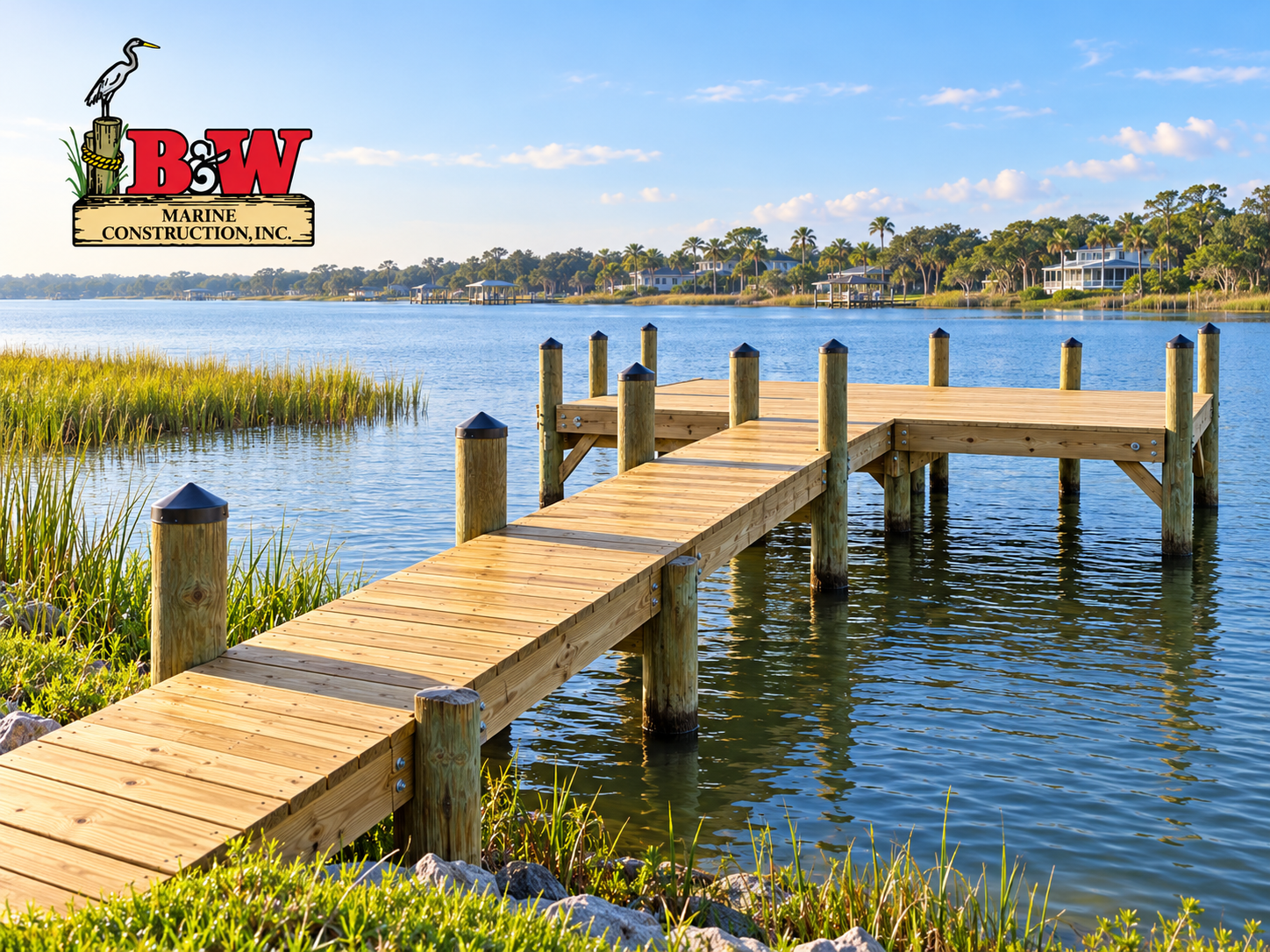
A simple, straight dock design costs less than one with additional features like an L shape, a larger platform area, or built in benches and railings.
Site Accessibility
Properties with difficult water or land access for construction equipment typically face higher costs due to the added labor and logistical complexity involved.
Local Permitting Costs
Permitting fees and requirements vary based on your specific location and any environmental considerations tied to your particular waterway.
General Cost Considerations by Wood Type
While exact pricing requires a property specific quote, wood docks generally follow a predictable cost hierarchy based on material choice, with pressure treated pine representing the most affordable option, cedar sitting at a mid range price point reflecting its natural durability advantages, and premium hardwoods commanding the highest cost due to their exceptional longevity and appearance.
Rather than relying on general online estimates, requesting a detailed quote based on an actual assessment of your property and desired specifications gives a far more accurate picture of realistic costs for your specific project.
Wood Dock Maintenance Costs to Factor In
Beyond initial construction cost, it’s worth considering ongoing maintenance expenses specific to wood. Pressure treated wood typically requires periodic sealing or staining to maintain its protective qualities, while cedar and premium hardwoods, while still benefiting from some maintenance, generally require less frequent attention given their natural resistance properties. Factoring these ongoing costs into your overall budget gives a more complete picture of wood dock ownership beyond just the initial construction price.
Wood vs. Other Dock Materials: A Cost Perspective
Wood generally offers a more accessible upfront cost compared to materials like aluminum or composite decking, though it’s worth weighing this against differences in long term maintenance needs and expected lifespan, since the cheapest initial option isn’t always the most cost effective choice over the full life of the structure.
Why Getting Multiple Quotes Matters
Given how much wood dock costs can vary based on wood type, size, and site conditions, getting quotes from a few experienced dock builders helps you understand the realistic range for your specific project, rather than relying on a single estimate or general online average that may not reflect your particular situation.
What a Thorough Quote Should Include
- Material costs specific to your chosen wood type
- Labor costs for piling installation and deck construction
- Any permitting fees or associated costs
- Estimated project timeline
Final Thoughts
Wood dock construction costs depend heavily on the specific wood type chosen, overall size and configuration, and site-specific conditions like water depth and accessibility. Getting a detailed, property specific quote from experienced wood dock builders offers a far more reliable picture than general cost averages, helping you budget appropriately for both construction and ongoing maintenance.
If you’re planning a wood dock project, B&W Marine Construction offers dock construction services with detailed, property specific quotes for Jacksonville area waterfront properties.
Frequently Asked Questions
1. What’s the most affordable wood option for dock construction?
Pressure treated pine is generally the most budget friendly choice, offering decent durability when properly maintained over time.
2. Is cedar worth the extra cost compared to pressure treated pine?
Cedar offers natural resistance to rot and insects along with an appealing appearance, many homeowners find this durability and aesthetic advantage worthwhile, though it does come at a higher upfront cost.
3. How often does a wood dock need maintenance to stay in good condition?
This varies by wood type, pressure treated wood typically needs more frequent sealing or staining, while cedar and premium hardwoods generally require less frequent attention due to their natural durability.
4. Does water depth really affect wood dock construction costs?
Yes, deeper water or more challenging bottom conditions typically require more extensive piling work, which increases both material and labor costs.
5. Is wood more affordable than aluminum or composite dock materials?
Generally, wood offers a lower upfront cost, though it’s worth weighing this against potential differences in long term maintenance needs and expected lifespan when comparing materials overall.